
Sarasota County Criminal History Checks
Begin with the record that can answer the question. Sarasota ClerkNet is the county source for a prosecution that reached Circuit or County Court. It generally provides online Sarasota criminal case coverage from 2003 forward, with anonymous access to basic case information and images allowed by Florida's court security rules. A recent custody event starts with the Sheriff's official arrest search. A county-only history starts with the Sheriff's Records Section, while a statewide Florida repository result comes from FDLE.
- Collect the full name, date of birth, spelling variants, approximate event date, and case or booking number if known.
- Search ClerkNet for filed charges and outcomes, or the Sheriff arrest search for a recent booking.
- Compare the case number, date, court, arresting agency, and available identifiers before accepting a name match.
- Read the chronological docket for the filed charge, disposition, and sentence rather than relying on the booked charge.
- Request an older, unavailable, plain, or certified record from the office that created or keeps it.
For Sarasota County criminal records that are older or unavailable online, the Clerk Public Access Department accepts a Record Search Request by mail, phone, or fax. Supply the name, years to search, document, case number when known, and the copy type. For an incident report, contact the arresting Sheriff or police agency instead of asking the Clerk for a law-enforcement file.
Reading Sarasota County ClerkNet
ClerkNet is the practical bridge between an allegation and the court's result. Anonymous visitors may see basic case information and permitted images without an account. Registration adds Case Watch and broader image-request functions. Sealed and confidential matters do not appear, and older series may require staff help. The official Clerk court-services page shows where the county directs online court users.
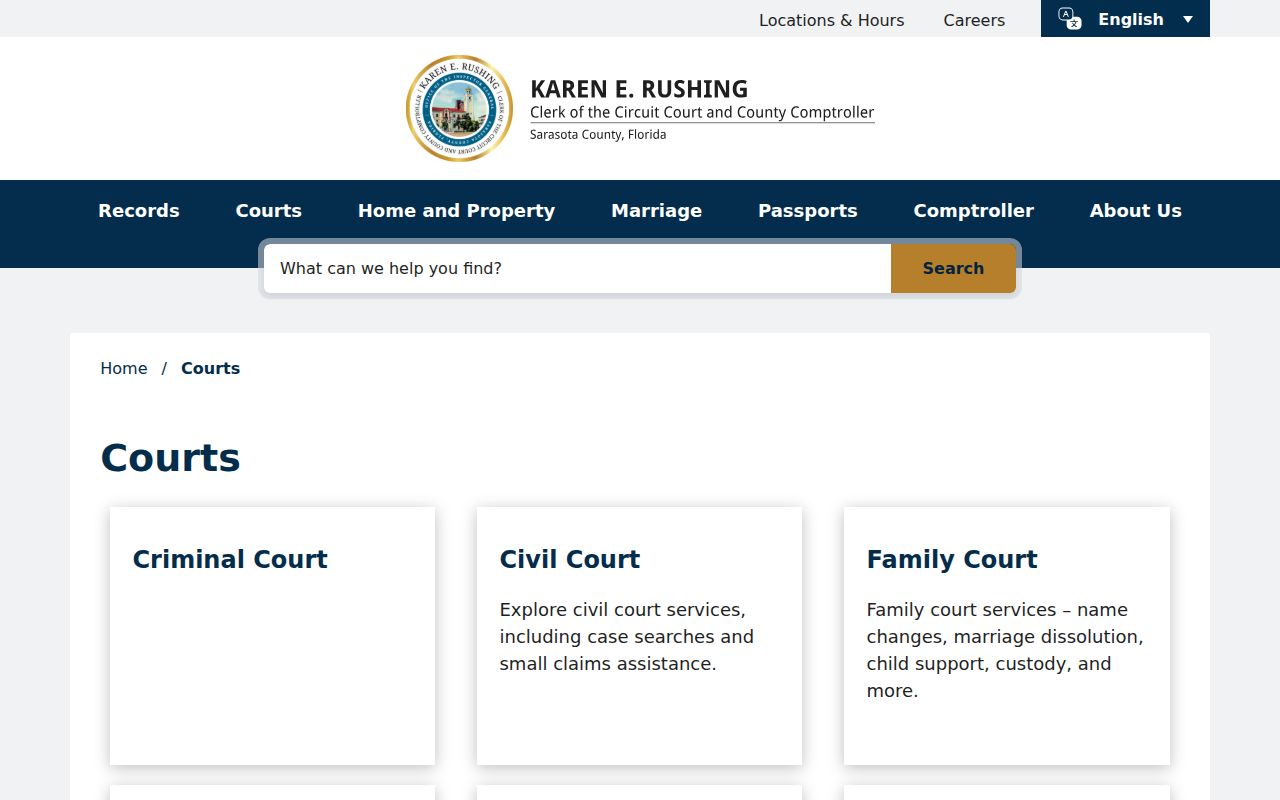
The pictured entry point matters because it leads to the filed case, not merely the intake allegation. Search by case number when possible. With a name, narrow by year or case type, compare identifiers, open the matching docket, and distinguish pending charges from disposed counts.
| ClerkNet detail | How to use it |
|---|---|
| Case number and filing date | Confirm the exact prosecution and separate similar names. |
| Court, division, and judge | Identify whether Circuit Court or County Court holds the matter. |
| Charge and statute | Read the filed charge, which may differ from booking. |
| Docket events | Follow hearings, pleas, motions, judgments, and sentencing. |
| Status and disposition | Tell a pending matter from dismissal, acquittal, or conviction. |
| Document images | Open only images allowed by the Florida court security matrix. |
Official Background Checks in Florida
The Florida Department of Law Enforcement maintains the central Florida criminal-history repository. Its public name search costs $24 plus a $1 online card-processing charge. Instant Search returns an immediate printable or emailable result, but it is not certified. FDLE also offers staff-run certified and non-certified searches. The research lists about five business days for a non-certified staff search and six to seven business days for a certified and notarized response, plus mail time.
The official FDLE explanation of products and fees is shown at the linked Florida Checks page.
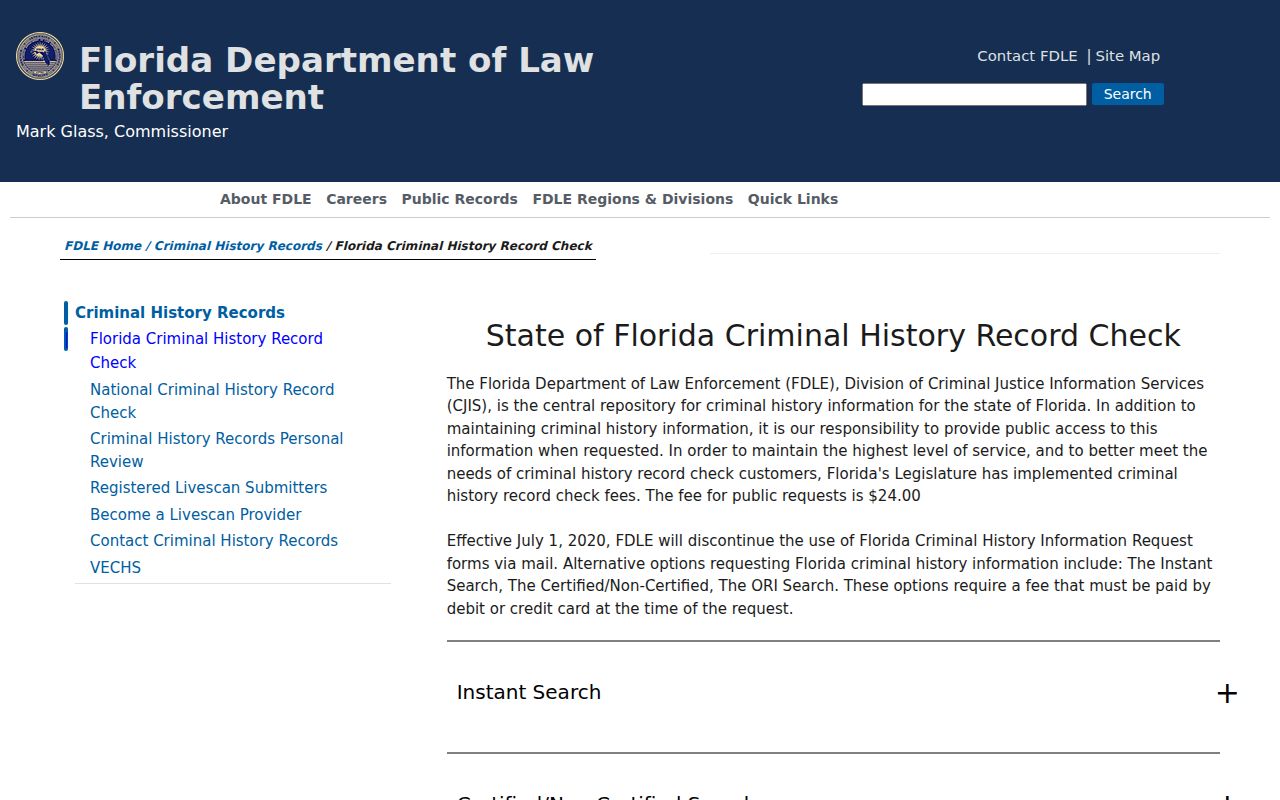
This state result has broader reach than a Sarasota County local check, but a name-based match can be ambiguous and reporting can be incomplete. Verify a result against Sarasota County court records and use FDLE's challenge route when an arrest or disposition appears wrong.
Sarasota Record Review and Fingerprints
FDLE separates a public name search from a person's review of their own Florida record. Personal Review is free, subject-only or available through a designated attorney, fingerprint-based, and meant for review and challenge. Prints must be taken by a law-enforcement or criminal-justice agency. FDLE does not accept self-taken impressions. The form and fingerprint card go to FDLE's Criminal History Record Maintenance Section in Tallahassee.
The public CCHInet name-search interface illustrates the separate paid route.
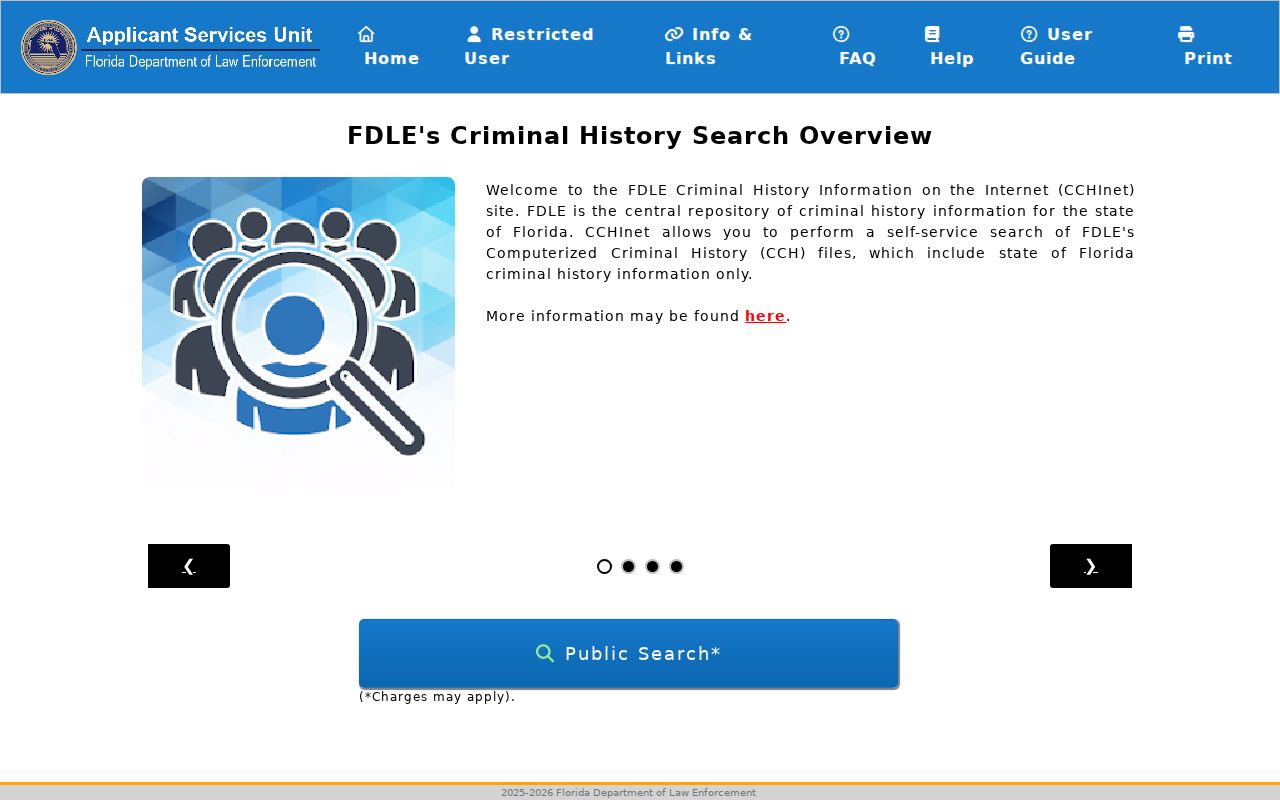
For a statutorily authorized fingerprint check, Florida uses approved LiveScan providers and an Originating Agency Identifier supplied by the requesting agency. The ORI controls the purpose and recipient, so a resident should obtain it before choosing a provider. For a person's own FBI Identity History Summary, the FBI accepts fingerprints through its electronic portal, mail, or an approved channeler. That service is not a name check on another person.
| Check | Scope | Known government charge | Main limit |
|---|---|---|---|
| Sheriff local check | Sarasota County | No charge | Not statewide |
| ClerkNet basics | Filed Sarasota cases | Free | Not a rap sheet; online criminal coverage generally begins in 2003 |
| FDLE public check | Reported Florida history | $24 plus $1 online processing | Name ambiguity and reporting gaps are possible |
| FBI identity summary | FBI-maintained identity history | $18 | Subject's own fingerprint-supported summary |
Kinds of Criminal Records
Sarasota County criminal history is not one document. The arresting agency writes an incident or probable-cause report. The Correctional Facility makes a booking record. The State Attorney chooses whether and what to file. The Clerk keeps the resulting court case. FDLE organizes reported events by identity and arrest cycle. FDC maintains prison and adult felony-supervision data, while the FDLE registry serves a separate public-notification purpose.
- Incident and arrest reports describe an investigation and probable cause, not guilt.
- Booking records document jail intake, booked charges, bond, and release processing.
- Court case files hold the filed charge, docket, plea, judgment, disposition, and sentence.
- Repository histories group reported Florida arrests and dispositions by identity.
- Corrections and registry files address custody, supervision, or statutory registration.
The Sarasota County criminal court file is the best place to resolve how a filed local charge ended. The Sheriff report remains the source for the investigation, and the FDLE product is useful when the question extends beyond county borders.
How Sarasota Arrest Data Travels
After an arresting agency creates its report, a booking at the Sarasota County Correctional Facility produces intake identifiers, a photograph and fingerprints, booked charges, property records, medical screening, warrant checks, and release processing. The State Attorney then decides what formal charge, if any, to file. The Clerk records court events and the disposition. Reporting agencies and clerks transmit reportable events to FDLE's CJIS repository.
Record flow: Arresting agency › Sarasota County booking › State Attorney › Circuit or County Court › FDLE repository.
This sequence explains why two official screens can disagree without either being the complete story. A booking entry may show an original allegation while ClerkNet shows a later information, amended charge, dismissal, plea, or sentence. FDLE may update after the local docket. Compare dates and identifiers, then verify the outcome with the Clerk.
Sarasota County Criminal Records: What They Contain
A Sarasota County criminal record changes shape with its custodian. A repository history emphasizes identity and arrest cycles. A court file emphasizes the case and its chronology. A booking record emphasizes intake and custody. Public systems suppress Social Security numbers, protected victim and minor identities, medical details, and other confidential information.
| Name and identifiers | Name, aliases, date of birth, and agency identifiers where lawfully displayed. |
|---|---|
| Arrest and booking | Agency, arrest and booking dates, booking number, alleged offenses, bond, and release status. |
| Filed case | Case number, court, division, filing date, judge, lawyers, and charging instrument. |
| Docket and outcome | Hearings, motions, pleas, judgment, dismissal, acquittal, conviction, and sentence. |
| Custody or supervision | Prison, release, probation, or other reportable status in the proper agency system. |
Names alone do not prove identity. A reliable Sarasota County criminal history review uses a case or booking number when possible and compares the date, agency, court, and other lawful identifiers.
Sarasota Criminal Record Offices
The county's main record offices sit near Ringling Boulevard and Main Street, but they perform different jobs. The Silvertooth Judicial Center houses Circuit and County Court activity. The Clerk handles court access. The Sheriff's Records Section occupies the first floor of the Criminal Justice Center. The Correctional Facility is nearby. South-county users also have court functions in Venice.
The official Twelfth Judicial Circuit courthouse page provides the source view of the principal court building.
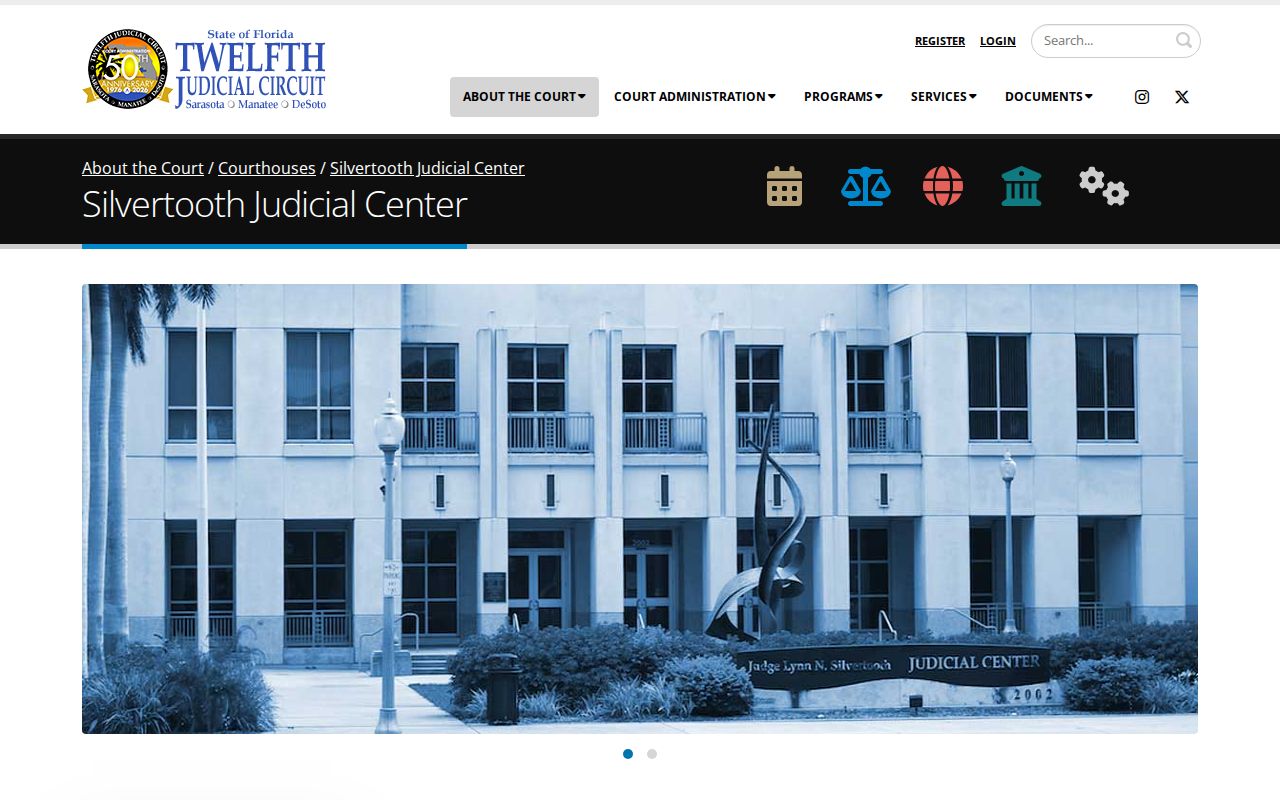
The building is at 2002 Ringling Boulevard, Sarasota, and the published court hours are Monday through Friday, 8:30 a.m. to 5 p.m. Visitors seeking records should still identify the custodian first because a courthouse desk does not hold every law-enforcement or repository record.
Clerk Public Access
2000 Main Street, Sarasota. Call 941-861-7400 for older, certified, archived, or unavailable court records and the Record Search Request process.
Sheriff Records Section
2071 Ringling Boulevard, first floor, Sarasota. Call 941-861-4025 for local checks and Sheriff records. Official pages conflict between 7 a.m. and 8 a.m. opening times, so call first.
Correctional Facility
2020 Main Street, Sarasota. Booking can be reached at 941-861-4601 for the county custody channel.
Florida Public Access Laws
Florida's working rule is public unless a statute, court rule, or order makes a record confidential. It does not mean that every detail is open. Ask the agency that created the record, and expect protected portions to be redacted while the nonexempt remainder is produced. Sarasota County criminal records can be limited by juvenile confidentiality, active investigative exemptions, victim protections, medical privacy, security concerns, or a sealing or expunction order.
Key access laws:
Florida Statutes chapter 119 provides inspection and copying of nonexempt public records and permits lawful copy and extensive-use charges.
Florida Statutes section 943.053 governs dissemination of criminal-history information and FDLE fees.
Florida Rule 2.420 governs access to and confidentiality of judicial records.
Florida Statutes section 943.0585 governs court-ordered expunction and continuing access exceptions.
A custodian should be able to cite the exemption used for a denial or redaction. Court records belong with the Clerk, Sheriff records with the Sheriff, city reports with the appropriate police department, statewide repository questions with FDLE, and corrections status with FDC.
Sarasota Sheriff Records and Fees
The Sheriff's Records Section provides a no-charge local Sarasota County check and accepts requests for Sheriff-created records not shown online. A useful request identifies the event, date, location, agency case number if known, people involved, record type, and desired delivery format. Mail goes to Sarasota County Sheriff's Office, Attn: Records, P.O. Box 4115, Sarasota, FL 34230-4115.
The official Sheriff public-record request page shows the Records Section channel.
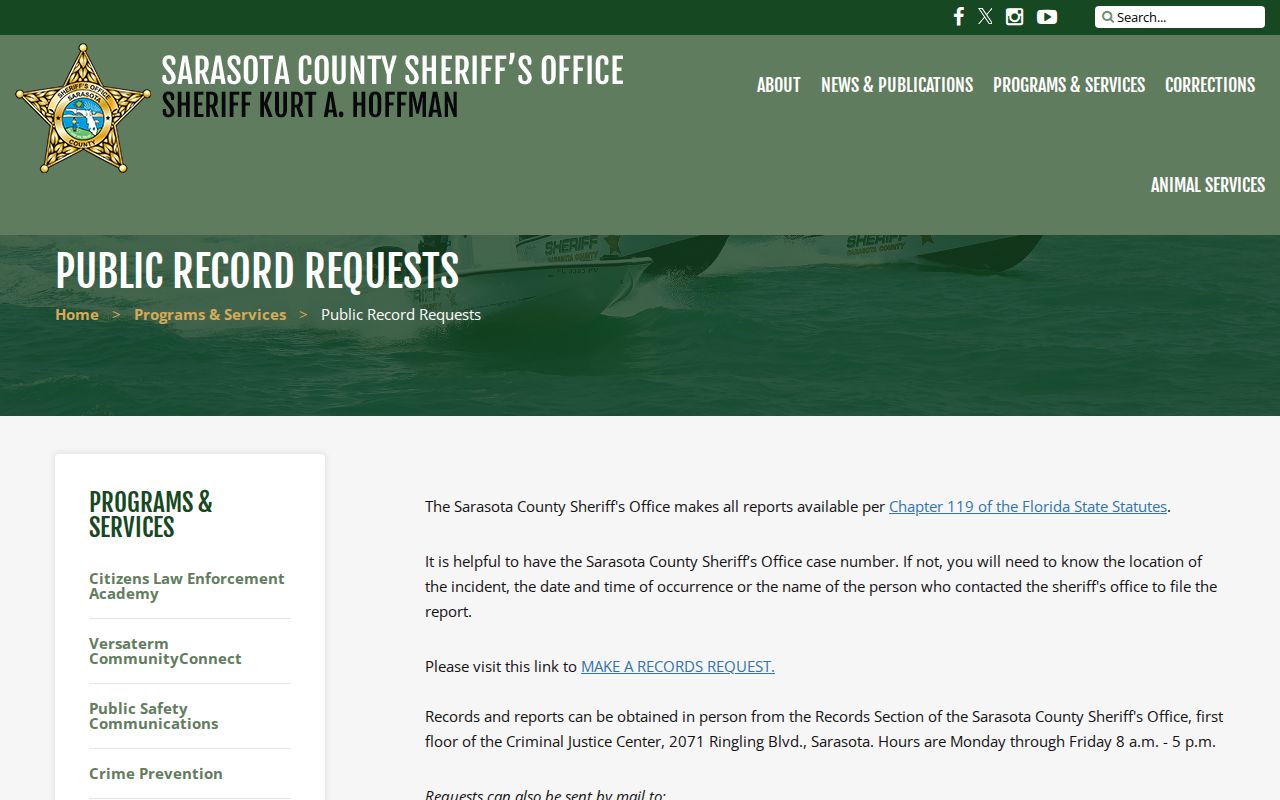
That office does not replace FDLE for a statewide history. Its own pages also give different opening times, one starting at 7 a.m. and another at 8 a.m., while both list a 5 p.m. close. Calling 941-861-4025 before a visit avoids choosing between conflicting published hours.
| Product | Known fee or condition |
|---|---|
| Sheriff Sarasota County local check | No charge; county scope only |
| Clerk plain copy | $1 per page |
| Clerk certification | $2 per document, in addition to copies |
| Clerk exemplification | $7 |
| Official-record name and year search | $2 per name and year |
| Clerk card transaction | 3.5% processor fee |
Restricted, Sealed & Expunged Records
ClerkNet excludes sealed and confidential cases. Florida also restricts juvenile records, active criminal intelligence or investigative information, protected victim details, medical information, Social Security numbers, confidential informants, some body-camera recordings, and security or undercover information. Expunction and sealing are distinct. Sealing restricts ordinary access. Expunction generally goes further, while statutes retain disclosure and access rules for specified agencies and situations.
For a Sarasota County case, first obtain a certified disposition and identify the correct relief. An FDLE Certificate of Eligibility application may require fingerprints, the certified disposition, prosecutor certification when applicable, and a $75 fee. FDLE currently states that applications are handled in received order in about 12 weeks and are not expedited. The certificate is not an order clearing the record. The petition, affidavit, certificate, and proposed order must still be filed in the court with jurisdiction.
Prior adjudications, earlier relief, excluded offenses, and the case result affect eligibility. Florida also has specialized administrative, juvenile-diversion, human-trafficking, lawful-self-defense, and automatic-sealing routes. Preserve needed reports and dispositions before relief because later access can be sharply limited, even for the subject.
Sarasota Jail, Warrants, and Supervision
The Sarasota County Correctional Facility is the local custody source. Its public arrest search covers booking information from several law-enforcement agencies, so a reader must contact the arresting agency for the actual report. The displayed booked charge is not the final disposition. For a complete arrest-to-outcome path, use the official Sarasota County arrest search guide and then verify any filed case in ClerkNet.
Warrants require a similarly layered check. The Sheriff handles service and records requests; court-issued capias or bench-warrant events may appear in the Clerk docket; and the FDLE FCIC wanted-person search exposes a public subset updated on its stated cycle. Any hit is informational and should be confirmed with the reporting agency before action.
For state prison or adult felony supervision, use the FDC Corrections Offender Network. It is not a county jail roster or a full Sarasota County court file. Florida's felony probation is state-run through FDC community corrections, while the court docket is the best public source for the sentence and later violation events. The Florida Commission on Offender Review handles the limited parole framework that still applies.
Sarasota Court and Booking Terms
Florida vocabulary helps prevent a false conclusion when moving between Sarasota County criminal records. The most important distinction is between an allegation and an adjudicated outcome.
- Booking
- Jail intake after an arrest, including identifiers, alleged charges, bond, and release processing.
- Information
- The formal charging instrument filed by the State Attorney.
- Capias
- A court command directing that a person be taken into custody.
- Disposition
- The result of a case or charge, such as dismissal, acquittal, plea, or conviction.
- Adjudication withheld
- A Florida outcome that withholds formal adjudication subject to governing law.
- Nolle prosequi
- The prosecutor's decision not to continue a charge.
- Expunction
- Relief that generally removes a qualifying record from ordinary access, subject to statutory exceptions.
A booking charge can change before an information is filed, and each count can receive a separate disposition. Read the docket by count and date. A closed case is not necessarily a conviction, and an arrest by itself is never proof of guilt.
City-by-City Criminal Records in Sarasota County
North Port, Sarasota, and Venice maintain distinct police-record channels, but none has a separate Florida municipal criminal court. City arrests that lead to prosecution move into Sarasota County or Circuit Court, while city police retain their incident and arrest reports. The three city guides keep that division clear.
North Port Record Check
Use the North Port Police Records Section for local reports, then follow filed charges into ClerkNet.
View North Port recordsSarasota Record Check
Start with Sarasota Police for city incident records and the Sheriff for county booking data.
View Sarasota recordsVenice Record Check
Use the Venice Police Records Bureau for city reports and Sarasota County courts for prosecutions.
View Venice recordsThe official North Port Police records page demonstrates one of those city-specific request routes.
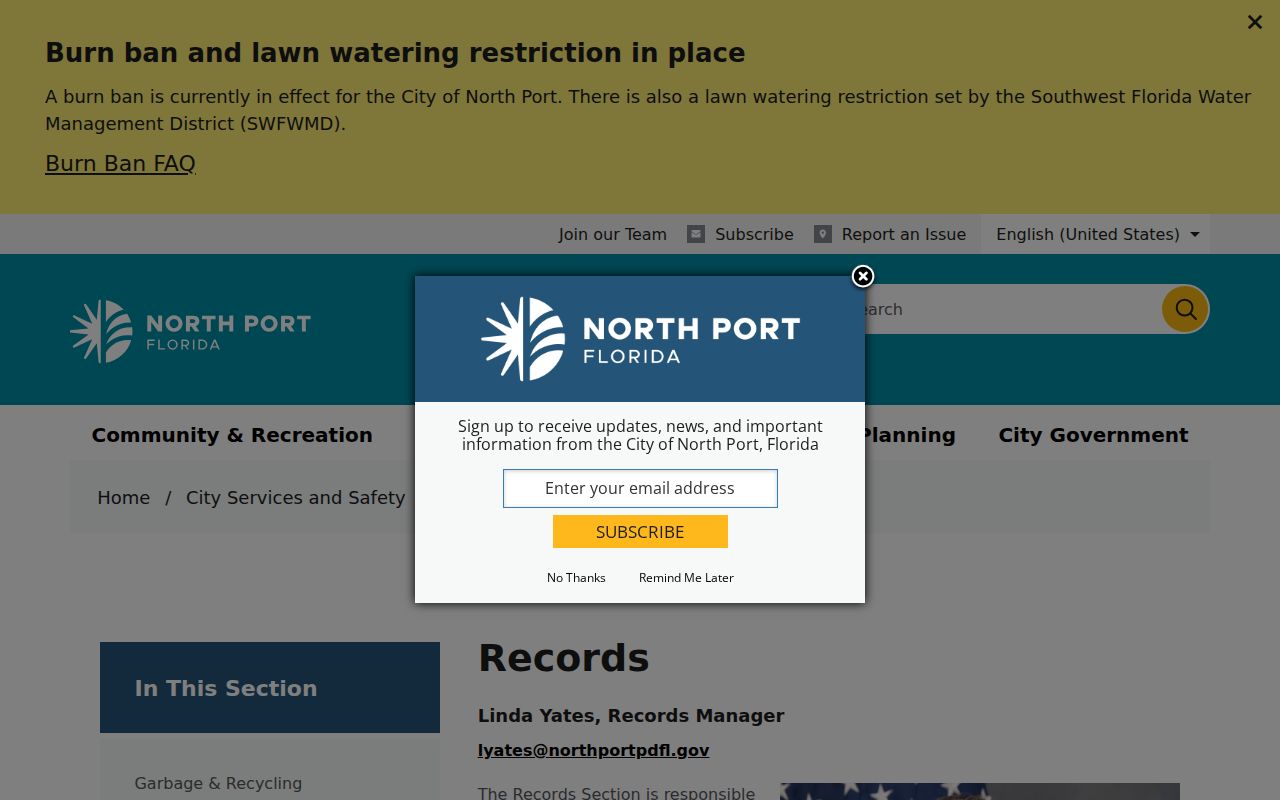
That source documents email, mail, and counter options for North Port. Sarasota and Venice use their own police custodians, while the county Clerk remains the shared destination for filed criminal cases.
Sarasota Clerk Copies and Archives
When ClerkNet does not supply the needed Sarasota County criminal record, Public Access is the fallback. A requester may mail the Record Search Request to P.O. Box 3079, Sarasota, FL 34230, call 941-861-7400 with card payment, or fax the completed request to 941-861-7738 with card details. Include the name, years to search, case number if known, desired document, other identifiers, and whether a plain or certified copy is needed.
The Clerk estimates roughly three business days for a complete request. Official records from 1921 forward may be electronic or on microfilm, but individual court-series coverage differs. The linked Clerk Public Access page presents the counter and remote channels.
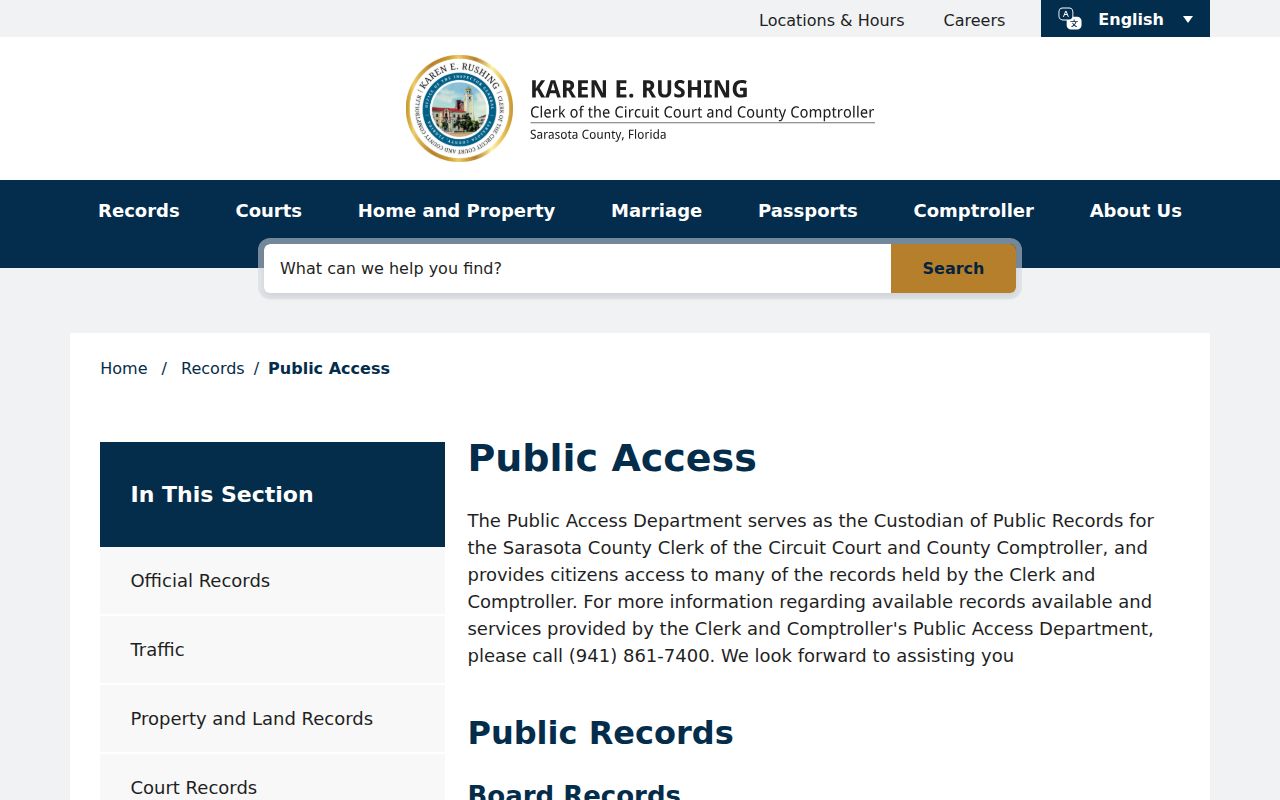
This is the route for older, certified, archived, or unavailable court material. It does not turn the Clerk into the custodian of a police report. Send that request to the Sheriff or city police department that created it.