
Running a Sarasota County Sex Offender Lookup
Begin with the FDLE Sexual Offenders and Predators Search, Florida's official public portal. It accepts both person and place searches, so a reader who does not know a name can choose Sarasota County or enter an address, city, or ZIP code. Results can appear as a list or map. FDLE says the registry updates continuously, but information arrives from registrants, law enforcement, the Florida Department of Corrections, and the Department of Highway Safety and Motor Vehicles. A recent move or agency delay can therefore matter.
For a Florida-wide result, use FDLE. For someone who may have registrations outside Florida, add the National Sex Offender Public Website. Questions about Sarasota registration or suspected noncompliance should go to the Sarasota County Sheriff's Office registration function or FDLE at 1-888-FL-PREDATOR. Accuracy concerns may also be emailed to sexpred@fdle.state.fl.us. A positive identity requires fingerprint comparison; a similar name or appearance is not enough.
Search Sarasota by Place or Name
The official FDLE search form shows why a Sarasota lookup does not require a named person.
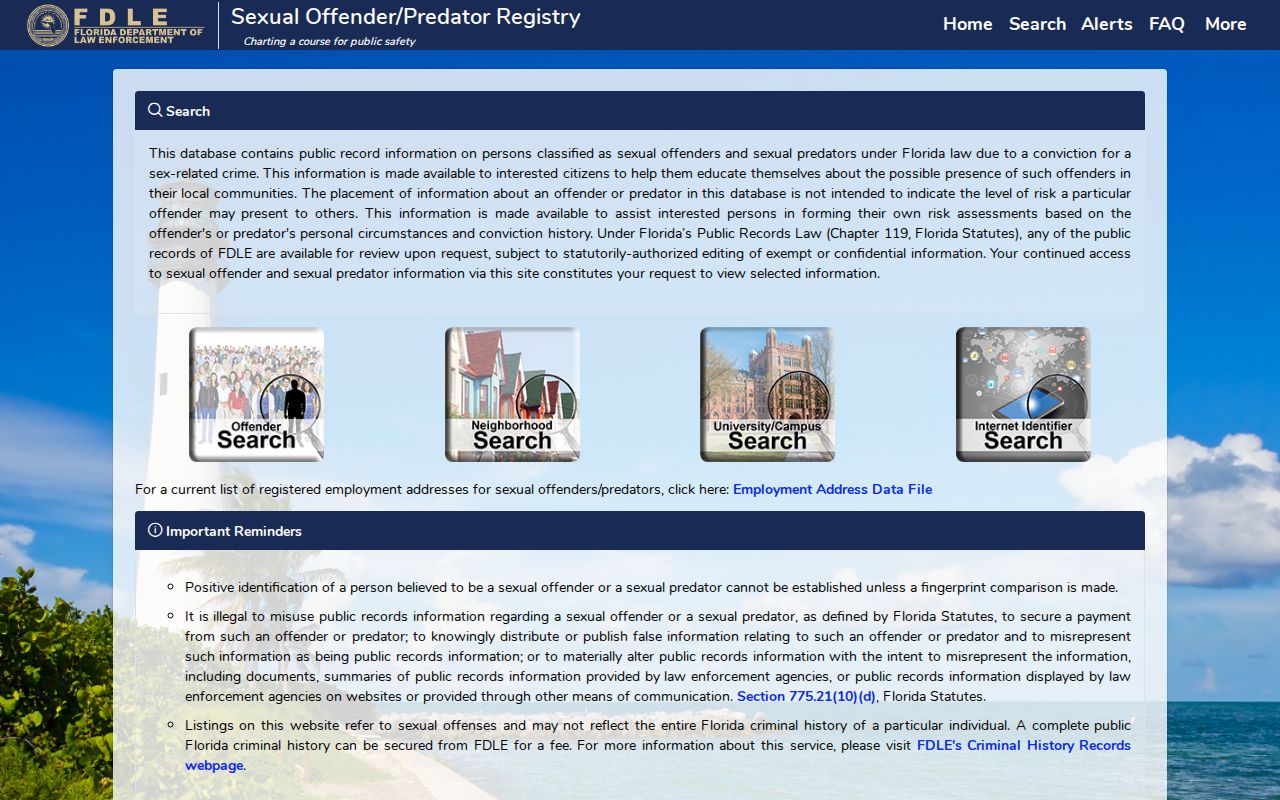
Choosing Sarasota in the county field returns a locality-based set; adding a name or city can narrow it. Keep enough breadth to catch aliases and nearby addresses, then compare multiple identifiers before treating a result as a match.
Searching Florida's Offender Registry
FDLE combines records for qualifying sexual offenders, sexual predators, and qualifying juvenile registrants. The public form requires at least one of first name, last name, city, county, or ZIP. Names may be partial, and place-only searches are allowed. The status and type controls help separate released, supervised, confined, absconded, or other recorded circumstances without replacing a close review of each profile.
- Open the FDLE registry and read its conditions and accuracy warning.
- Enter a full or partial name, or select Sarasota County and optionally add a city or ZIP code.
- Use offender type, status, state status, aliases, and thumbnails to refine the list.
- Open a possible match and compare aliases, photo, birth information, physical description, addresses, offense details, and verification data.
| Field Label | Type | Required | Notes |
|---|---|---|---|
| First / Last Name | Text | One location or name field | Full or partial names; aliases may be included |
| City / ZIP Code | Text | One location or name field | May be used without a person's name |
| County | Dropdown | One location or name field | Choose Sarasota from all 67 counties |
| Offender Type | Choice | No | Offenders, predators, or both |
| Offender / State Status | Multiselect / choice | No | Includes absconded, confined, released, supervised, in-state, and out-of-state options |
| Address Radius / Map | Geographic tool | No | Map and distance choices can change on the live portal |
Read the FDLE Warning First
FDLE's registry home and warning material explains that its information comes from several reporting sources and can change.
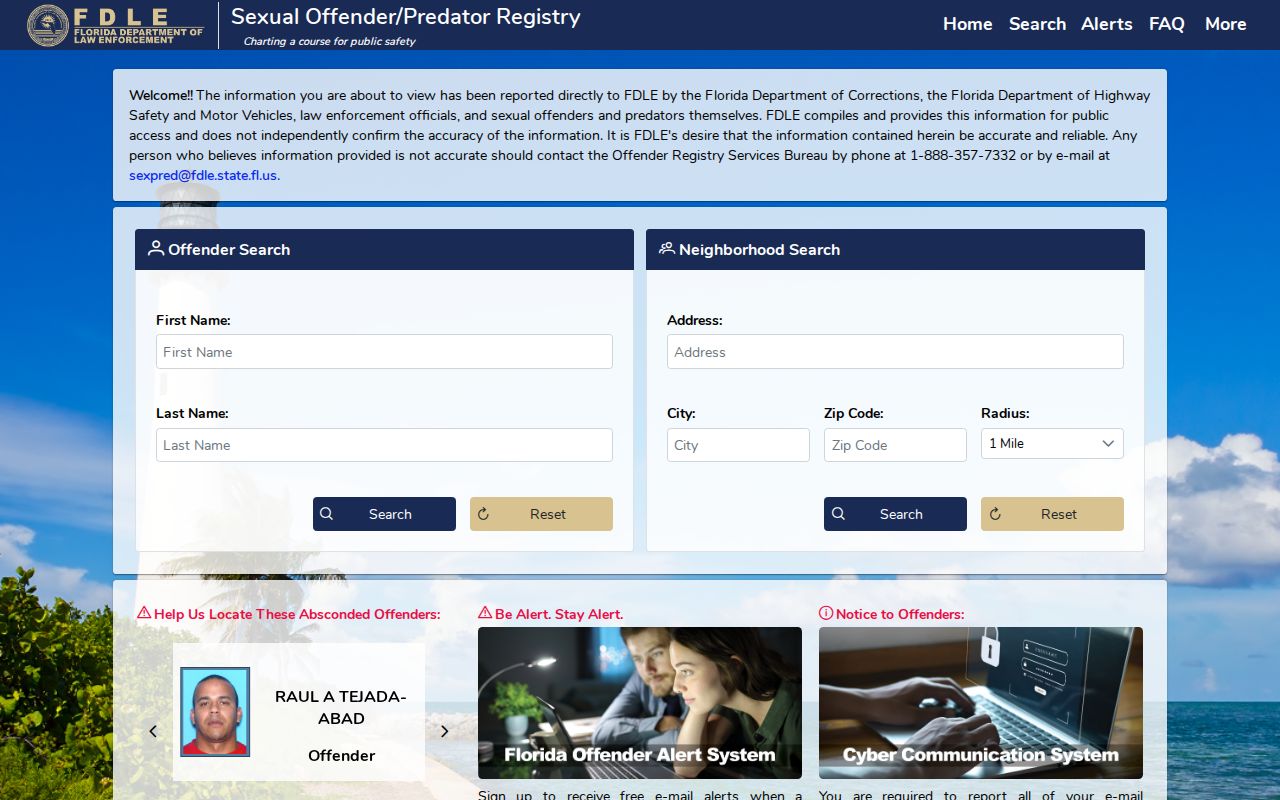
That warning changes how a result should be used: verify the profile, note its last registration or verification details, and report a suspected error rather than assuming the portal is a real-time statement of a person's exact location or conduct.
What a Registry Profile Shows
A Florida profile is detailed enough to distinguish many similar identities, but each field answers a different question. The designation is a statutory classification, the status describes the recorded registration circumstance, and an address is information reported through the registration system. None is a prediction of present behavior.
| Name & Aliases | Primary identity and alternate names used to compare a possible match. |
|---|---|
| Photo & Physical Description | Photograph, age or birth information, race, sex, height, weight, hair, eyes, and identifying marks or tattoos. |
| Registered Address | Residential and temporary addresses reported to the registration system; vehicle information may also appear. |
| Offense & Statute | Qualifying offense, statute, jurisdiction, and conviction date. |
| Florida Designation | Sexual offender or sexual predator under Florida law, not a generic federal consumer tier. |
| Registration Status | Recorded status plus registration and verification information, including absconded or supervision labels when applicable. |
Offender and Predator Mean Different Things
Florida does not organize its public portal around a simple Tier I, II, and III chart. “Sexual offender” and “sexual predator” are legal classifications controlled by Florida statutes and the underlying designation. Reporting frequency, duration, and possible removal depend on the offense and legal history. Federal tier language seen elsewhere should not be substituted for what an FDLE profile actually says.
Qualifying registrants are publicly listed and generally register for life. Some offenders may petition after at least 25 years lawfully released from all sanctions, confinement, and supervision without an intervening arrest, subject to excluded offenses and a judge's discretion. Predator-removal provisions vary by the date and authority of designation. Someone who leaves Florida remains in the database, and FDLE retains a deceased listing for one year after documented death.
Registration Requirements and Levels in Florida
Florida's current instructions divide in-person reregistration schedules by offense and designation. Many registrants report during the birth month and sixth month; others report in the birth month and every third month. Electronic mail addresses and Internet identifiers must be reported within 48 hours through FDLE's Cyber Communication System or in person. The controlling statute and profile designation, not an invented tier label, determine the rule.
| Level / Tier | Duration | Verification Frequency |
|---|---|---|
| Sexual offender | Generally lifetime; limited petition route may apply after statutory conditions | Generally twice yearly, unless the offense or designation requires quarterly reporting |
| Sexual predator | Generally lifetime; removal rules depend on designation date and authority | Often four times yearly under applicable rules |
| Qualifying juvenile registrant | Controlled by the qualifying adjudication and Florida law | As required by the applicable designation and instructions |
Florida Alerts Follow Addresses
The Florida Offender Alert System can email a subscriber when a registrant moves within a selected distance of an address. A subscriber may instead follow a particular registrant and receive notice of that person's move anywhere in Florida. This is useful for ongoing awareness because it does not require repeatedly rebuilding the same Sarasota search.
Alerts supplement, rather than replace, the live profile. Review any notice against FDLE identifiers and current status. Florida law does not impose one blanket statewide residency distance on every registrant: section 775.215 is conviction-specific, while a local ordinance may impose an additional restriction. A map pin alone cannot explain which rule applies.
FDC Search Adds Custody Context
The Florida Department of Corrections Offender Search is a separate statewide source for people sentenced to state prison or state supervision.
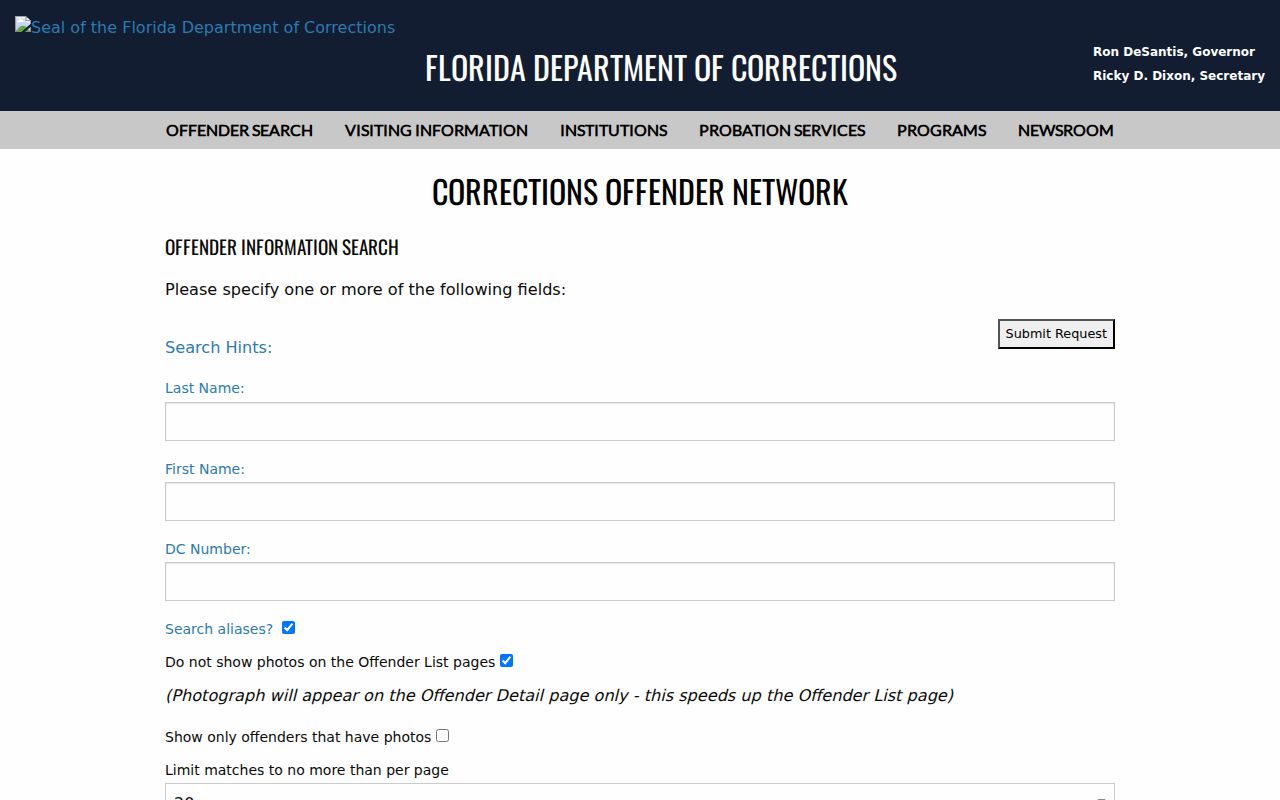
Use it to add custody or supervision context when a registry profile points to FDC, not as a substitute for FDLE's registry. The FDC locator excludes Sarasota County jail inmates and may not reflect rapid changes in location, status, or release information.
Lawful Use and Community Notification
The registry exists for public notification and informed safety planning. If information appears wrong, contact FDLE at 1-888-357-7332 or sexpred@fdle.state.fl.us; suspected noncompliance may also be reported through the Sarasota County Sheriff's Office registration function. Do not contact the listed person. Preserve the profile details and let the responsible agency compare the registration record.
Use registry information lawfully. FDLE warns that using registry information to facilitate a crime is illegal under Florida law. Threats, intimidation, vigilantism, harassment, or confrontation can create criminal and civil liability; use results only for lawful safety awareness.